

Connect with us


Corporate Video


AI Development in 2026: Trends, Technologies, and Business Impact
.png)
No longer just an emerging technology, artificial intelligence is quickly becoming a core component of enterprise automation and business strategy. By 2026, AI will have profoundly advanced impact in its scope from experimentation, pilot, and proof of concept systems to fully productionized workflows, products, and integrated physical environments. The shift from adoption to trust in AI systems and the frameworks that will govern its operational scaling for measurable business optimization and ROI.
AI development in 2026 will be determined by focus. Priorities will be autonomous agentic systems, business context-aware, domain targeted, generative AI, and AI-native systems that fundamentally disrupt software engineering.
Specialized, smaller models that can interconnect through Retrieval-Augmented Generation (RAG) architectures will replace large, generic models. It is complemented by edge infrastructure, and governed AI ecosystems. This will be a shift towards AI becoming deeply integrated, practical, and explainable to the end-user in the completion of work.
Business leaders find themselves at a crossroads of opportunity and responsibility at this moment in time. An AI development company which considers a fundamental operating capability and not a peripheral tool will enjoy unprecedented productivity, innovation, and competitive edge.
This blog post will analyze key AI development trends for 2026 and the accelerating technologies underlying the trends, and outline the necessary knowledge for business leaders to stay competitive.
AI Market Statistics and Adoption Trends in 2026
AI adoption will reach a structural tipping point in 2026 across most industries. Gartner predicts 2026 will see over 80% of enterprises having at least tried and likely implemented Generative AI applications, move from pilot programs to operational deployment. You will see AI integrated into routine business applications so that it will no longer exist in siloed frameworks.
A key trend will be the rise of agentic AI and multi-agent systems, capable of autonomous, multi-step decision-making and collaboration. We will see AI move beyond conversational interfaces, as autonomous agents will perform multi-step tasks in collaboration with other AI systems. Such systems are predicted to be able to “think”, “act”, and “collaborate” independently, within certain parameters. We can consider it both a digital workforce and digital employees.
The investment in infrastructure is quickly changing. Money spent on AI is now directed to AI supercomputers, dispersed GPU systems, and Edge AI supporting the device processing. Moving away from the monolithic cloud model, the infrastructure change is to a hybrid model that is more efficient and privacy preserving.
Concurrently, regulatory compliance becomes a must rather than a nice to have. Gartner forecasts that by 2028, 50% of enterprises will have adopted cyber security platforms designed to mitigate AI risk (e.g, data leaks, rogue AI, non-compliance).
Hence, the evidence of AI adoption in 2026 will be the trio of scale, specialization, and structure. AI will be more widely deployed, however, the deployment will be more controlled, context specific, and tailored to the businesses’ needs.
Key AI Development Trends to Watch For in 2026
AI development trends across the enterprises in 2026 will not be traditional incremental improvements, but rather, will be a shift in how intelligence is designed, deployed, and governed across enterprises.
Gen AI 3.0: From General Purpose to Domain Specific Generative AI
2026 is the year that most commentators will name as the start of Gen AI 3.0 as enterprises shift from general-purpose models to Domain Specific Language Models (DSLM). While there will be important large language models (LLMs) in deployment, enterprises will have to face the fact that there will be more domain specific language models that work more effectively in regulated, complex, and context rich environments.
Training or focusing bespoke models on industry, function, or organizational data enable them to comprehend the unique terminologies, workflows, and constraints inherent to a business. Gartner estimates that half of the enterprise GenAI models will be domain models, with the shift taking place in 2026. Such models are more precise and compliant guesswork with a significantly less operational cost when compared to other models.
For business, the conclusion is obvious: AI is a tool to be employed strategically; the real advantage is not in applying AI to every facet of the business, but doing so with a specific objective in mind. GenAI 3.0 enables engineering documentation, customer support, compliance workflows, and decision support systems- applications in which accuracy and trust are of utmost importance.
Models being trained on verified and secured data bolster systems for business to position themselves for the deeply embedded governance frameworks that stream these trends.
Agentic AI: Auto-Embedded Business Systems Workflows
The increase of agentic AI will be one of the most impactful changes to the AI development landscape in 2026. No longer will the systems simply respond to prompts but will be able to autonomously plan a task, take appropriate actions, assess the results, and self-correct. Instead of a singular AI assistant, the future will comprise multi-agent systems (MAS): real-time collaborations of specialized autonomous agents.
Workflows can, in principle, be seamlessly automated from start to finish. For instance, in marketing, one agent can be devoted to creating campaign content while another one tests different types of content, and a third agent allocates and re-allocates budgets based on some performance data. In finance, with no human input, agents reconcile transactions, anomalies, generate reports, and do other transactions.
Modular agentic AI enables scalable automation without the risks of fragile, monolithic systems, acting as intelligent, task-specific team members. Embedded AI agents become modular team-mates working within a specific set of constraints. As your references point out, this is the transition from AI being a tool, to AI being a participant in the business.
How Software is Built is Being Redefined: AI-Native Development Platforms
The automation of the development process is being redefined by AI-native development platforms. These development platforms bring generative AI (for coding, testing, documentation, and deployment) into the development lifecycle, cutting the development effort and time.
Gartner projects that, by 2030, 80% of organizations will start to transition from large software teams to smaller teams that are AI-augmented. This transition starts much sooner, with AI allowing non-technical domain experts to build applications within enclosed, safe, and pre-defined guards. The repetitive processes are automated, hire AI developers for architecture, integration, and governance, and for focused tasks.
To meet enterprise goals, the focus is now on small platform teams allowing the rest of the organization to create solutions. This democratization of development lowers IT backlogs, speeds up innovation, and allows for sustained control with governance and security frameworks.
2026 will continue the trend of developing AI focused on real-time. Businesses will need to deploy systems that can analyze and process data in real-time for fraud detection, logistics optimization, and cybercrime. This need is what drives the expansion of edge and on-device AI, where models run directly from the device with little, or no, reliance on the cloud.
More often than not, lightweight and optimized models will provide these benefits. In more heavily regulated sectors, this type of framework allows compliance with architectural standards by avoiding the transfer of sensitive data from the device. Using RAG architecture in real-time systems allows the AI to access information and keep it in context to provide accurate, relevant data.
What we are witnessing is an evolving set of infrastructures. Rather than centralized AI, we are experiencing a shift to a more distributed system that is designed to be faster, more resilient, and more trustworthy: distributed intelligence.
AI Security, Governance, and Trust Become Built-In by Design
As AI systems become more advanced and more incorporated into everyday functions, security and governance become less of an afterthought and more of a foundational design principle. AI brings forth more advanced risks that can't be handled by traditional security systems: prompt injection, data leakage, model misuse, and rogue agents.
Thus, AI Security Platforms become a highly sought after element of enterprise AI stacks. These systems allow organizations to have complete visibility and policy enforcement for every AI system within the organization. The fact that Gartner predicts that nearly 50% of firms will adopt these systems by 2028 speaks to the importance of governance.
There should be a focus outside of security—to what extent will these systems be compliant and will the systems be explainable? Legislation, such as the EU AI Act, pushes organizations to build systems that are both transparent and auditable. In 2026, trust will not be a differentiating factor. It will be a requirement for AI adoption.
Human + AI Workforces: Productivity, Upskilling, and the New Wage Premium
As of 2026, AI development is not eliminating human work, but reshaping it. Initial fears that AI will perform all tasks are no longer relevant. AI agents and AI copilots are designed to handle all repetitive and data-oriented work while human workers engage in high-order tasks which require judgement, creativity, and strategy. It is this human + AI collaboration that has become the predominant workforce model.
Having employees supervise and verify AI systems has prompted organizations to invest further in employee training. Because it creates a strong AI fluency base. It also creates high demand for an employee skill set.
Having these systems in place creates faster and more resilient organizations. The productivity ceiling has been extraordinarily high. But systems operate with ethics in place.
Technologies Accelerating AI Development in 2026
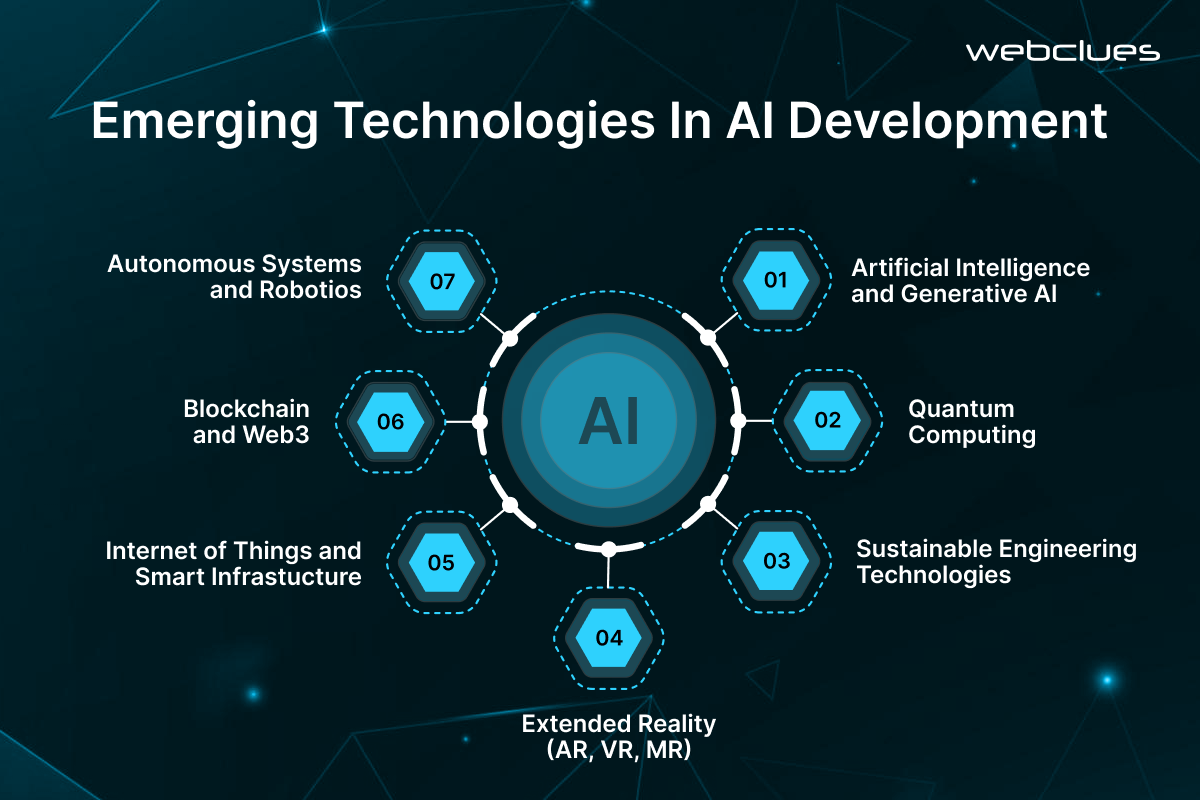
Every AI trend in 2026 has an enabling technology behind it.
Multi-Modal AI Across Voice, Vision and Language Interfaces
In 2026, AI is more than text. Multi-modal systems fuse speech, language, and vision. This enables employees to converse with and analyze visual data in real time with enterprise systems. This combination increases usability and accelerates adoption, reducing friction between employees and systems.
AI Supercomputing and Smarter Distributed Infrastructure
To support advanced AI workloads, organizations invest in systems built to support AI supercomputing. These systems include a combination of CPUs, GPUs, and accelerators to power advanced systems.
Also, Infrastructures are also becoming more decentralized (i.e. hybrid cloud, private networks, and edge computing). Infrastructures are becoming more advanced and more powerful, to scale, and become more regulated. This advanced infrastructure enables all major developments for AI for 2026.
Synthetic Data 2.0 to Solve, Scaling, Privacy, and Bias Problems
Availability of good quality data is one of the most significant bottlenecks for executing the AI vision. John Snow labs and other similar organizations are continuously challenged to innovating AI vision due to the inability to provide good quality data. Synthetic Data 2.0 to AI vision implementation challenges by creating realistic, scaled, privacy-preserved datasets.
These datasets allow organizations to train models without the risk of data breaches, but also reduce bias and improve the overall representation of datasets, and improve edge case coverage.
Synthetic data is crucial for Compliant AI innovations to flourish. This is especially true for heavily regulated industries like health care and finance.
Physical and Embedded AI Is Moving Intelligence to the World Outside of the Box
AI is no longer just a software phenomenon. Embedded and Physical AI integrate intelligent software with individual machines, sensors, and other devices. These entire systems, (be it industrial robots, smart Medical devices, or other equipment like Electric grids) can sense, decide, and act instantaneously.
Reflecting the influence Physical AI is having on Manufacturing, Logistics, and Infrastructure, Gartner lists it as one of the Top Technology Trends for 2026. These systems transform machines from programmable devices into real-time collaborating tools.
Industry-Level Business Impact of AI Development
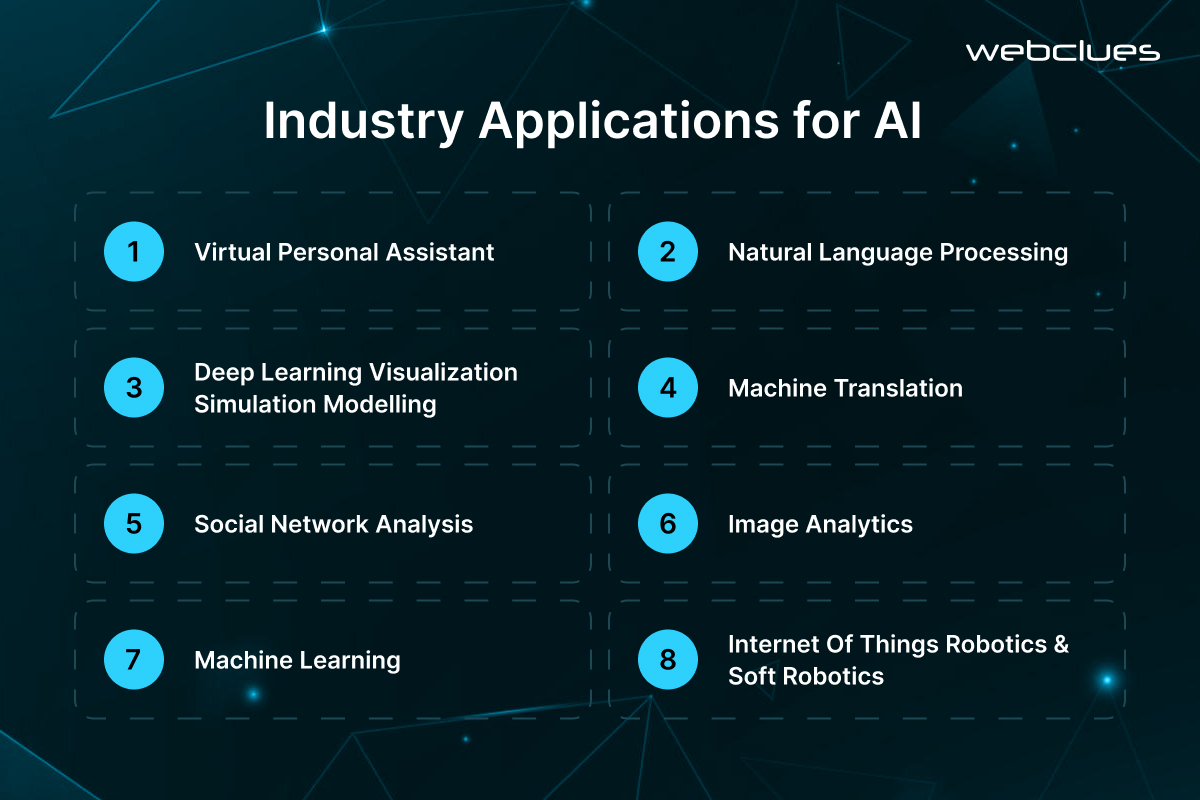
By 2026, expertise in AI development services graduates from an experimental stage and begins to have a measurable impact across different lines of business. Companies are no longer asking whether AI works — they're asking where it is most effective and what is the highest possible return. AI is revolutionizing the value creation ecosystem from decision making to real time operational scaling across all sectors.
AI in Healthcare: From Diagnostics to Predictive and Personalized Care
The development of AI facilitates earlier diagnoses, the ability to continuously assess and predict risks, and highly tailored treatment plans. Domain AI models power AI-assisted imaging, clinical decision support, and digital twins, models that simulate patient outcomes before intervention, to improve. AI systems successfully improve quality of care and lower operational and administrative costs all while maintaining strict regulatory compliance.
AI in Software, SaaS, and Product Engineering
AI-native development platforms are shortening product development cycles and are changing the fundamentals of software development. Engineering teams are able to ship product updates faster and have the ability to iterate at a higher cadence currently. SaaS products are able to embed AI at the core of the offering, transitioning users from receiving passive insights to automation of tasks to providing users with a proactive AI copilot.
AI in Manufacturing, Logistics, and Industrial Operations
Predictive maintenance, demand forecasting, and real-time process management are accomplished with the help of embedded and edge AI for industrial settings. Smart factories and logistic networks function as adaptive systems, learning from sensor data and responding to changes in real-time. Uptime is maximized, waste is minimized and supply chains are made more resilient.
AI in Finance, Risk, and Enterprise Decision Systems
Financial institutions utilize AI for fraud detection, risk modeling and monitoring, credit scoring, and compliance. Market volatility demands the communication of real-time decisions and transparency across the organization. Trust from stakeholders, customers, internal and regulatory, is built with a Governance-first AI design.
AI in Media, Marketing, and Autonomous Creativity
The ways in which content is produced, personalized, and optimized at scale is completely transformed with generative AI solutions. To retain strategic and brand oversight, humans collaborate with AI systems to automate the creativity of the campaign, test its performance across audiences, and manage the ideation. Without sacrificing consistency and quality, human–AI collaboration increases output.
What AI Development in 2026 Means for Business Leaders
What sets the most successful AI implementation in 2026 apart from the rest? Leadership decisions versus the chosen technology. The easily accessible AI technology in the market created an operational advantage in streamlining intelligent operational processes across teams, workflows, and decision-making. Leaders for whom AI is a core business capability were able to adapt and scale at a much faster rate.
The most notable change in leadership concerned the move from AI Adoption to AI operating frameworks. The most successful organizations embedded AI into the daily cycles of business operations, including planning and forecasting, executing, and monitoring. The work processes transformed pervasively and were performed by agentic systems. RAG-powered insights and AI-powered co-pilots facilitated work from executives, cross-functional teams, and task-based responsibility.
The importance of investment discipline in the most successful organizations is commendable. They reigned in the division of spend across AI technology, skilled workforce, and potential high-ROI use cases. Investment in tools with no skilled workforce to implement them results in an execution blind-spot. The reverse scenario, where a high-caliber workforce is available, can implement minor scalable tools to current workflows, results in growth stagnation.
The most successful organizations weaving responsible AI into their governance frameworks at the onset, building systems with purposeful intent. Designing systems with trust, and with the correct predictability of security and explainability of systems, are long term assets. The most successful organizations bridging the compliance gap woven within operational capabilities structured themselves to mitigate potential operational risks.
The unifying characteristic of strong AI Leadership in 2026 was building systems robustly, perfectly, and predictably.
Partner with WebClues for AI Development in 2026 and Beyond
The year 2026 is considered the starting point for AI development. Agentic systems along with domain-specific models and AI-native tools will transform the way organizations develop new products and compete in the marketplace. The focus will move away from the adoption of tools that provide value to building intelligent systems that automate and manage value creation.
At the same time, value creation will not happen simply with the use of AI technologies. Trust, transparency, and human-centered design will determine whether the value is enduring. Organizations that achieve value creation by striking a balance between automation and accountability as well as efficiency and empathy will be the leaders in innovation for the next decade.
Implementation of AI development trends in 2026 will require more than just technology; it will need strategy, governance, and execution. WebClues empowers organizations to build, design, and scale AI solutions that integrate with business strategy. WebClues helps businesses with AI development services, integrate them securely, and sustain and optimize them for competitive advantage.
The organizations that will succeed will be the ones that build AI tools in the most adaptable way and integrate them into ethical and resilient systems. Connect with experts if you want to lead with intelligence not just AI and turn emerging trends into real business results.
Post Author

Ayush Kanodia
As one of the esteemed Directors of WebClues Infotech. Ayush Kanodia is passionate about delivering innovative IT services & solutions and has spearheaded numerous successful projects, cementing the company's position as a leader in the field.


Build Your Agile Team
Hire Skilled Developer From Us
Make Business Gains by Adopting AI Trends with WebClues
Partner with WebClues to translate your AI strategy into operational systems with measurable business outcomes. Build efficient and safe AI systems with agentic workflows, domain intelligence, and governance-driven design.
Get a Quote!Frequently Asked Questions
Our Recent Blogs
Sharing knowledge helps us grow, stay motivated and stay on-track with frontier technological and design concepts. Developers and business innovators, customers and employees - our events are all about you.