



















Generative AI Development Services

Build production-ready LLM applications, RAG systems, AI agents, copilots and multimodal solutions connected to your enterprise data, applications and business workflows. We design and develop GenAI systems around your use case, architecture, integration requirements and production goals.

Talk to Generative AI Experts

Trusted by Businesses Building with Generative AI Tech

Businesses across industries work with WebClues to develop generative AI applications, integrate foundation models with existing systems, automate knowledge-intensive workflows and build AI capabilities into digital products.

Honeywell
enelX
ADNOC
Contis
Aswaaq Online

Expertise Behind Our
Generative AI Solutions

Our generative AI practice combines AI engineering, software development, enterprise integration and data expertise to move GenAI initiatives from experimentation to production.

+
Enterprise AI Systems Deployed
+
Custom AI Solutions Delivered
+
Digital Products and Projects
+
Technology Professionals
+
Industries Served Globally
%
Long-Term Client Retention

Generative AI Services
Built for Real Business Needs

Generative AI development involves more than connecting an application to an LLM API. We assess the use case, data, model, architecture, integrations, evaluation requirements and deployment environment to build solutions suited to the intended workflow.

Generative AI Consulting & Strategy

Define the right generative AI direction based on business objectives, use cases, data availability, technology requirements and implementation priorities.

Covers:
  • GenAI use case assessment
  • Solution strategy
  • LLM selection
  • Model evaluation & benchmarking
  • Architecture planning
  • Technology evaluation
  • Implementation roadmap
  • Build-versus-buy assessment
Generative AI Consulting & Strategy

Custom LLM Application Development

Build applications around large language models for content generation, knowledge access, document processing, conversational experiences and business workflows.

Covers:
  • LLM application architecture
  • Conversational AI
  • Content generation
  • Document generation
  • Summarization
  • Enterprise assistants
  • Context management
  • Application integration
Custom LLM Application Development

Retrieval-Augmented Generation Development

Connect generative AI applications with enterprise knowledge sources to retrieve relevant information and generate responses grounded in business data.

Covers:
  • Knowledge source integration
  • Document processing
  • Embeddings
  • Vector search
  • Semantic retrieval
  • Retrieval pipelines
  • Context management
  • RAG evaluation
Retrieval-Augmented Generation Development

AI Agent and Copilot Development

Build AI agents and copilots that interact with enterprise tools, access information and execute defined tasks across business workflows with appropriate human oversight.

Covers:
  • Agent workflow design
  • Tool and API integration
  • Function calling
  • Agent orchestration
  • Multi-step workflows
  • AI copilots
  • Human intervention
  • Agent evaluation
AI Agent and Copilot Development

LLM Fine-Tuning and Model Customization

Adapt suitable language models to specific business requirements when prompting, retrieval or application-level approaches do not provide the required behavior.

Covers:
  • Model evaluation
  • Fine-tuning strategy
  • Domain adaptation
  • Training data preparation
  • Parameter-efficient tuning
  • Model evaluation
  • Performance optimization
  • RAG evaluation
LLM Fine-Tuning and Model Customization

Multimodal Generative AI Development

Develop applications that work across text, images, audio, video and other data types to support richer user experiences and business workflows.

Covers:
  • Text generation
  • Image generation
  • Speech and audio applications
  • Vision-language applications
  • Vision-language applications
  • Multimodal interactions
  • Content transformation
  • Application integration
Multimodal Generative AI Development

Generative AI Integration and Deployment

Integrate GenAI capabilities with existing applications, enterprise systems, APIs, databases and cloud environments.

Covers:
  • API integration
  • CRM and ERP integration
  • Enterprise application integration
  • Data connectivity
  • Cloud deployment
  • Private AI environments
  • Application deployment
  • Production integration
Generative AI Integration and Deployment

Generative AI Evaluation & Optimization

Evaluate AI applications after development and support ongoing optimization, monitoring and operational requirements.

Covers:
  • Model evaluation
  • Response quality assessment
  • Retrieval evaluation
  • Performance optimization
  • Monitoring
  • Usage analysis
  • Cost optimization
  • Ongoing maintenance
Generative AI Evaluation & Optimization

Turn Generative AI Into
Measurable Business Value

Generative AI can support knowledge-intensive work, automate repetitive processes, improve access to information and create new AI-enabled product capabilities when connected to the right workflows.

Hire Generative AI Developers

Knowledge Productivity

Help teams search, summarize and work with enterprise information more efficiently.

Workflow Automation

Use GenAI applications and agents to support defined business processes and repetitive tasks.

Customer Experiences

Build conversational assistants, personalized experiences and AI-enabled support workflows.

Product Intelligence

Add generative AI capabilities to software products, applications and digital experiences.

Where Generative AI
Creates Business Impact

Generative AI creates value when connected to a defined business function, workflow or information requirement. WebClues, the best generative AI company develops applications around the operational context, data and systems involved.

Customer Service and Support

Customer Service and Support

  • Conversational AI assistants
  • Customer support automation
  • Knowledge assistants
  • Response generation
  • Ticket summarization
Sales and Marketing

Sales and Marketing

  • Content generation
  • Sales assistants
  • Lead intelligence
  • Personalized communication
  • Marketing workflow automation
Knowledge Management

Knowledge Management

  • Enterprise knowledge assistants
  • Intelligent search
  • RAG applications
  • Document question answering
  • Semantic retrieval
Operations & Process Automation

Operations & Process Automation

  • Workflow assistance
  • Document processing
  • Process automation
  • Decision support
  • AI-powered task execution

Generative AI Solutions
Built for Your Industry

Generative AI applications require different data, workflows, integration requirements and controls across industries. We adapt the solution architecture to the business environment and intended use case.

Healthcare
  • Healthcare knowledge assistants
  • Medical document analysis
  • Patient support applications
  • Clinical workflow assistance
  • Healthcare information retrieval

Generative AI Projects That
Solve Real Business Problems

Our generative AI development company has experience spanning image generation, creative automation, personalized travel planning and dynamic digital asset generation. Each solution combines AI models with application logic, data, APIs and deployment infrastructure around a defined business requirement.

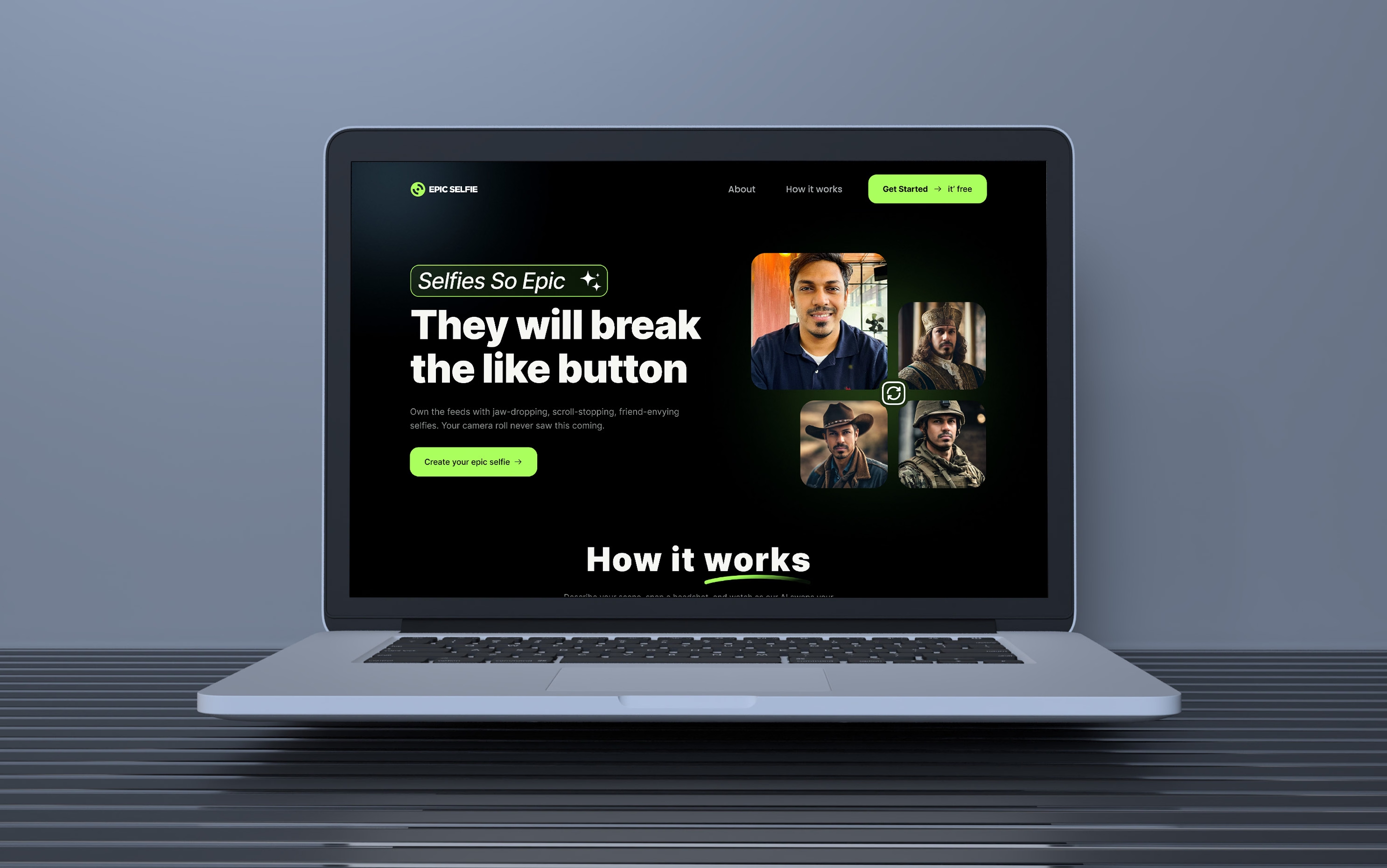
Epic Selfie: AI-Powered Image Transformation Platform

Challenge

A global digital media brand wanted to create an AI-powered experience that allowed users to transform selfies into fantasy scenes and character-based experiences. The platform needed realistic image generation, fast processing, scalable infrastructure and a premium monetization flow.

Solution

WebClues developed a scalable image transformation platform combining Stable Diffusion for background synthesis with GAN-based facial feature alignment. The system included FastAPI and Celery for asynchronous processing, AWS infrastructure for deployment and Stripe integration for premium high-resolution downloads.

Key Technologies

Stable Diffusion, GAN, TensorFlow, PyTorch, TensorRT, FastAPI, Celery, Redis, PostgreSQL, React.js, Next.js, AWS ECS, S3, Docker and GitHub Actions.

Epic Selfie case study
Results
  • 80,000+ registered users
  • 250,000 detection accuracy
  • 38% higher free-to-premium conversion
  • 40% lower server load
  • 4.7/5 average user satisfaction
  • 12-second average image generation time
  • 16-week deployment timeline

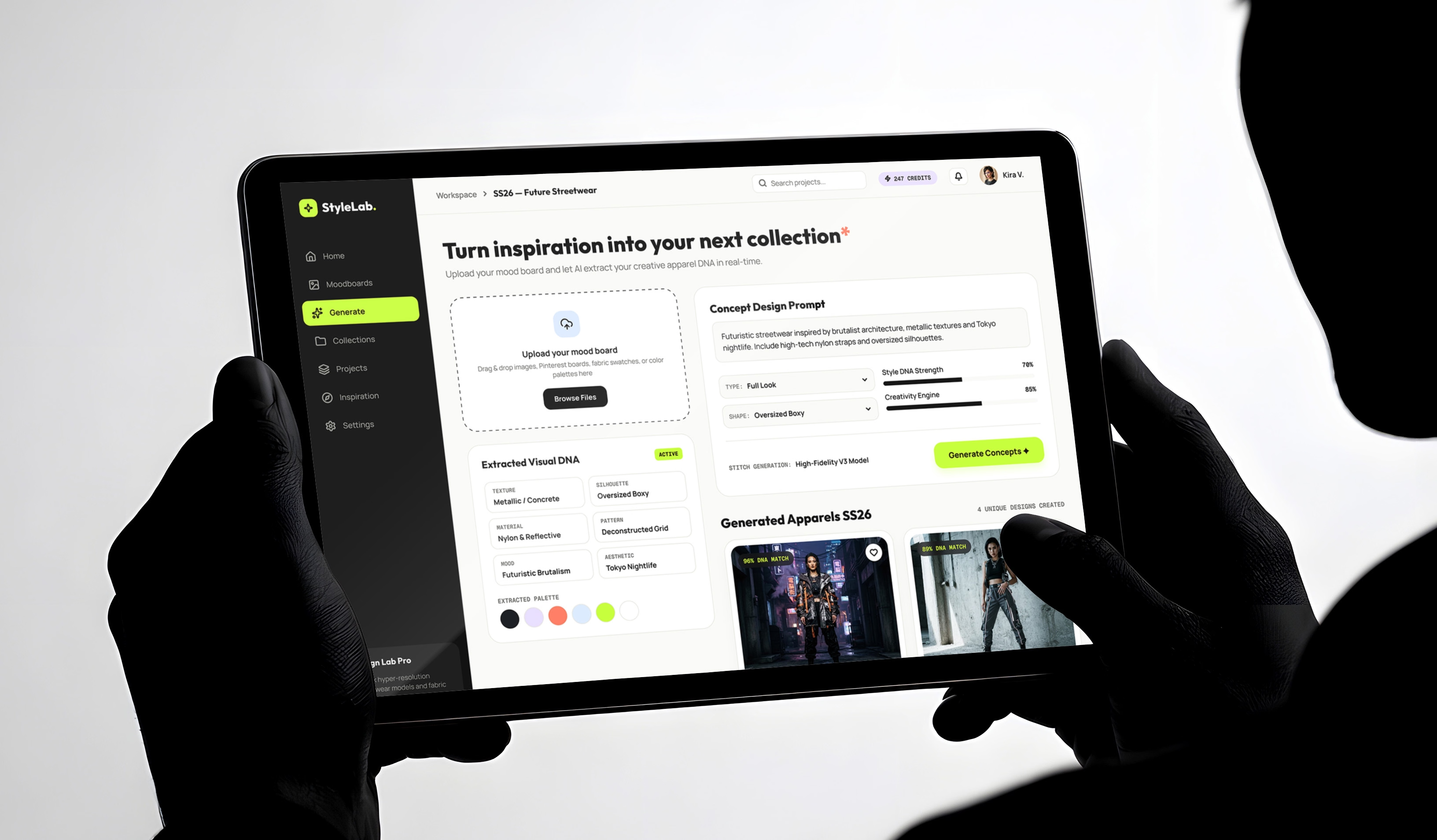
AI Apparel Design Generator: Generating Designs From Mood Boards

Challenge

A fashion and lifestyle client wanted to reduce the time required to turn visual inspiration into apparel concepts. Manual sketching, revisions and stylistic alignment were slowing the design process.

Solution

WebClues developed an AI-driven apparel design generator that analyzes visual mood boards for colors, textures, styles and aesthetic cues, then generates multiple design variations. The solution combined computer vision, generative modeling and a feedback layer for iterative refinement.

Key Technologies

Stable Diffusion, DALL·E 2, TensorFlow, PyTorch, OpenCV, PIL, Python, FastAPI, React.js, AWS EC2, S3, Docker, Kubernetes and GitHub Actions.

AI Apparel Design Generator case study
Results
  • Design time cut from 7 days to 2 days
  • 63% faster design turnaround
  • 75% active refinement rate
  • 87% design theme alignment
  • 10+ average user satisfaction
  • 80%+ designer satisfaction

AI Itinerary Planner for Personalized Travel

Challenge

Travelers were spending hours comparing destinations, attractions, reviews and schedules. Existing tools provided generic itineraries without sufficient personalization, real-time information or feasibility validation.

Solution

WebClues developed an AI itinerary planning platform that combines OpenAI GPT models with live attraction and dining data. Structured prompt frameworks interpret user preferences, while post-processing applies time, distance and opening-hour validation to generate practical itineraries.

Key Technologies

OpenAI GPT, custom prompt engineering, Google Places API, Foursquare API, Node.js, Express.js, React.js, AWS Lambda, EC2, S3, Docker and GitHub Actions.

AI Itinerary Planner case study
Results
  • 94% intent-to-itinerary accuracy
  • Itineraries generated in under 10 seconds
  • 2.8× faster response time
  • 50% lower planning abandonment
  • 20K+ itineraries in 3 months
  • Planning time cut from 3 hours to seconds
  • 4.7/5 user satisfaction

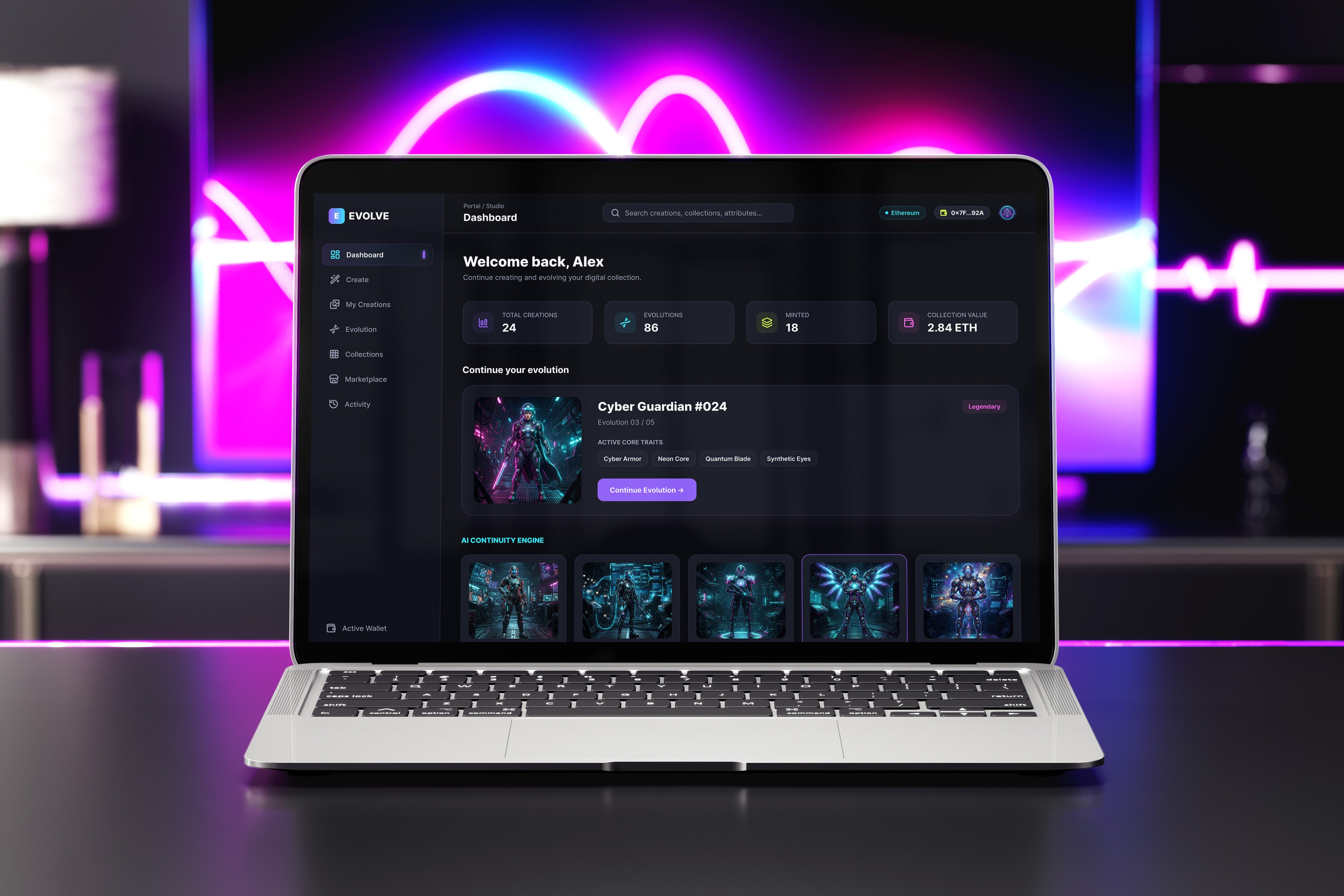
AI-Powered NFT Image Generation for Dynamic Digital Rewards

Challenge

A blockchain-based rewards platform relied on manual creation of digital collectibles. Creating multiple visual stages for evolving rewards required significant design effort and slowed reward releases.

Solution

WebClues developed a sequential AI image generation pipeline using the Flux diffusion model. Each generated image used contextual information from the previous stage to maintain visual continuity. The system included prompt conditioning, automated reward assignment, a Gradio interface for review and APIs designed for blockchain integration.

Key Technologies

Flux Diffusion Model, custom prompt conditioning, Python, FastAPI, Gradio, AWS EC2, S3, Docker and GitHub Actions.

AI-Powered NFT Image Generation case study
Results
  • Image generation: 3 days → 30 minutes.
  • 85% less manual design effort
  • 100% thematic continuity
  • 40% more collectible interactions
  • Thousands of assets generated in batches

The Technologies Powering
Our Generative AI Solutions

Technology selection depends on the use case, data requirements, model capabilities, performance expectations, deployment environment and operating considerations. We evaluate these factors before defining the appropriate GenAI architecture.

Generative AI & Large Language Models

Generative AI & Large Language Models

  • OpenAI models
  • Google Gemini
  • Meta Llama
  • DeepSeek
  • Commercial LLMs
  • Open-source LLMs
Retrieval-Augmented Generation

Retrieval-Augmented Generation

  • Enterprise knowledge retrieval
  • Semantic search
  • Vector-based retrieval
  • Document intelligence
  • Context augmentation
  • Knowledge-grounded generation
AI Agents and Copilots

AI Agents and Copilots

  • AI agents
  • Tool-using agents
  • Workflow agents
  • AI copilots
  • Agent orchestration
  • Human-in-the-loop workflows
Multimodal Generative AI

Multimodal Generative AI

  • Text generation
  • Image generation
  • Speech and audio
  • Video generation
  • Vision-language applications
  • Multimodal interactions

Our Generative AI
Technology Stack

Our technology stack supports GenAI application development, model integration, retrieval, data connectivity, deployment and ongoing operation.

Foundation Models

  • OpenAI
  • Gemini
  • Llama
  • DeepSeek
  • Stable Diffusion
  • DALL·E
  • Flux

Programming and AI Frameworks

  • Python
  • Java
  • C++
  • R
  • TensorFlow
  • PyTorch
  • Hugging Face
  • FastAPI

AI Application Layer

  • LLM integrations
  • Prompt engineering
  • RAG pipelines
  • Vector databases
  • Semantic retrieval
  • AI agent frameworks
  • AI copilots
  • Model evaluation

Data and Enterprise Integration

  • Enterprise databases
  • Data pipelines
  • REST APIs
  • CRM integration
  • ERP integration
  • Enterprise application integration

Cloud and Deployment

  • AWS
  • Docker
  • Kubernetes
  • Cloud infrastructure
  • Private AI environments
  • Production deployment

Monitoring and Optimization

  • Model evaluation
  • Application monitoring
  • Response evaluation
  • Retrieval evaluation
  • Performance optimization
  • Cost optimization

Generative AI Development
Cost: What to Expect

Generative AI development costs vary according to the application scope, data environment, model requirements, integrations, security requirements and deployment architecture. Planning ranges can vary substantially between a basic GenAI application and a large enterprise RAG or agentic implementation.

Estimated Cost
AI Integration Scope
Project Scope
Timeline
Estimated Cost$40,000 – $150,000
AI Integration ScopeBasic GenAI integration, single LLM, basic RAG, chatbot or content assistant
Project ScopeSingle-use-case application for one team or workflow
Timeline3 – 4 months
Estimated Cost$150,000 – $250,000
AI Integration ScopeMulti-source RAG, enterprise data integration, analytics, workflow automation
Project ScopeDomain-specific GenAI application with multiple integrations and users
Timeline4 – 7 months
Estimated Cost$250,000 – $400,000+
AI Integration ScopeAdvanced AI orchestration, multiple models, agents, governance and enterprise integrations
Project ScopeEnterprise GenAI platform supporting multiple use cases and business functions
Timeline7 – 12+ months

*These are indicative planning ranges rather than fixed WebClues quotations. Final pricing depends on project scope, data environment, model requirements, integrations, security, deployment architecture, user volume and ongoing operational requirements.

What Drives the Cost of
Generative AI Development?

Several practical factors influence the scope and cost of a GenAI development project.

Build vs. Integrate

Using an existing foundation model through an API generally requires less upfront development than building or extensively customizing a proprietary model.

Model Customization

Fine-tuning or custom model development can increase costs because of training data preparation, GPU infrastructure, experimentation and specialized engineering.

Data Readiness

Unstructured, fragmented or inaccessible enterprise data may require additional data preparation, transformation, indexing and retrieval engineering before it can support a GenAI application.

RAG Complexity

RAG costs vary according to the number and type of data sources, document processing, retrieval architecture, indexing, access controls and evaluation requirements.

AI Agent Complexity

A basic assistant is less complex than an agent that can call multiple APIs, execute workflows, interact with enterprise systems and operate under defined permissions.

Enterprise Integrations

CRM, ERP, databases, APIs and existing applications add integration, testing and security requirements to the development scope.

Security and Governance

Sensitive business data, access controls, auditability, human oversight, monitoring and regulatory requirements can increase both development effort and infrastructure needs.

Deployment Environment

Cloud, private cloud, on-premises and hybrid deployments have different infrastructure, security and operational requirements.

From Generative AI Idea to
Production: Our Development Process

Our GenAI development process moves from business requirements and data assessment through architecture, development, evaluation, integration and deployment.

01

Business and Use Case Assessment

We understand the business objective, target users, workflow, data requirements, constraints and expected outcomes.

Business and Use Case Assessment
02

Data Assessment and Preparation

We evaluate available data, knowledge sources, quality, accessibility, structure, privacy requirements and processing needs.

Data Assessment and Preparation
03

Architecture and Model Selection

We determine whether the solution requires an API-based LLM, RAG, fine-tuning, AI agents, multimodal AI, private deployment or a combination of approaches.

Architecture and Model Selection
04

Prototype and Solution Validation

We develop an initial implementation to validate the technical approach, user experience, response quality and key evaluation criteria.

Prototype and Solution Validation
05

GenAI Application Development

We build the application, prompts, retrieval pipelines, agent workflows, integrations and supporting services required for the solution.

GenAI Application Development
06

Evaluation and Testing

We evaluate model responses, retrieval quality, application performance, reliability, security and defined business requirements.

Evaluation and Testing
07

Integration and Deployment

We connect the solution with enterprise systems and deploy it within the required cloud, private or production environment.

Integration and Deployment
08

Monitoring and Optimization

We monitor performance, usage, response quality and operational requirements and optimize the solution as business needs evolve.

Monitoring and Optimization

How We Build Production-Ready Generative AI Solutions

Our development approach focuses on the complete AI application rather than treating the foundation model as the entire solution.

Use-Case-First Architecture

We begin with the business workflow and determine where GenAI can provide useful capabilities before selecting the technology.

Fit-for-Purpose Model Selection

We evaluate model capabilities, cost, latency, context requirements, privacy and deployment options against application requirements.

RAG Where Enterprise Knowledge Matters

We connect models with relevant business information when responses need current, organization-specific or document-based knowledge.

Fine-Tuning Where Model Adaptation Is Required

We consider fine-tuning when a use case requires specific behavior or domain adaptation beyond prompting and retrieval.

Agents for Defined Workflows

We use agent architectures when AI needs to interact with tools, APIs or multiple workflow steps rather than simply generate a response.

Evaluation Before Production

We define response, retrieval, performance and business evaluation criteria before treating a GenAI application as production-ready.

Integration With Existing Systems

We design GenAI capabilities to work with existing applications, databases, APIs and enterprise workflows.

Continuous Optimization

We monitor application performance and optimize models, prompts, retrieval, infrastructure and workflows after deployment.

Built for Security, Governance
and Responsible AI

Generative AI applications can involve sensitive enterprise information, external model providers, automated outputs and business-critical workflows. Security and governance requirements therefore need to be considered throughout development and deployment.

Data Privacy and Protection

Data Privacy and Protection

  • Data access controls
  • Data minimization
  • Sensitive information protection
  • Data retention considerations
  • Secure knowledge sources
AI Risk and Governance

AI Risk and Governance

  • AI risk assessments
  • Model governance
  • Output validation
  • Human oversight
  • Auditability
Security and Access Control

Security and Access Control

  • Role-based access
  • Secure APIs
  • Identity management
  • Infrastructure security
  • Controlled enterprise data access
Responsible AI

Responsible AI

  • Model evaluation
  • Human review
  • Bias considerations
  • Output monitoring
  • Transparency requirements

Flexible Ways to Build Your
Generative AI Solution

Choose a development model based on project scope, technical requirements, timeline and the level of AI engineering support required.

Dedicated Generative AI Developers

Extend your engineering capacity with dedicated developers working on your GenAI application, integration or AI product requirements.

Best ForOngoing GenAI development
EngagementMonthly
TeamDedicated GenAI developers and specialists
CollaborationYour preferred communication and project tools
ControlDirect involvement in development priorities

Get a Custom Quote

Why Businesses Choose WebClues
for Generative AI Development

We combine generative AI capabilities with software engineering, data integration and enterprise application development to take GenAI initiatives beyond model experimentation.

01Business-Focused AI Development
Business-Focused AI Development

We connect GenAI capabilities with defined business workflows, user requirements and practical application objectives.

02Architecture Beyond the Model
Architecture Beyond the Model

Our approach considers the application, data, retrieval, integrations, APIs, infrastructure and operational environment around the model.

03Multiple GenAI Approaches
Multiple GenAI Approaches

We work across LLM applications, RAG, fine-tuning, AI agents, copilots and multimodal AI according to the requirements of the solution.

04Enterprise Integration
Enterprise Integration

GenAI applications can be connected with existing applications, databases, APIs, CRM, ERP and enterprise workflows.

05Production-Oriented Development
Production-Oriented Development

We consider evaluation, security, deployment, monitoring and optimization as part of the development lifecycle.

06AI and Engineering Expertise
AI and Engineering Expertise

Our capabilities span generative AI, LLMs, AI agents, machine learning, computer vision, NLP, automation and enterprise software development.

07Strategy-to-Execution Support
Strategy-to-Execution Support

Our capabilities can support the journey from GenAI use-case assessment and architecture through development, integration, deployment and optimization.

Explore AI Projects We
Delivered Across The Globe

Explore our portfolio of AI projects, built for businesses across industries to solve complex challenges, streamline workflows, improve user experiences, and turn AI capabilities into measurable business outcomes.

Peugeot

Peugeot

Unlock the Power of Automation with Honeywell

Honeywell

Honeywell

Experience Latest Automotive Technology with Peugeot

Dubai Calendar

Dubai Calendar

Experience Grandeur of Dubai Events Dubai Calendar App!

Turn Your Generative AI Strategy Into Production

Move from a GenAI opportunity or prototype to an application designed around your data, workflows, technology environment and production requirements.

Discuss Your Gen AI Project Needs
AI integration connecting existing business systems

Frequently Asked Questions

Generative AI development services involve designing and building applications that use foundation models and generative AI technologies for specific business requirements. Services can include LLM application development, RAG, fine-tuning, AI agents, copilots, multimodal AI, integration, deployment and ongoing optimization.

Traditional AI applications often focus on prediction, classification, recommendation or other analytical tasks. Generative AI applications can create or transform text, images, audio, video, code and other content using foundation models. Enterprise solutions can combine generative AI with traditional machine learning and other AI technologies.

RAG can be appropriate when an application needs to generate responses using organization-specific, current or document-based information. It connects an LLM with external knowledge sources instead of relying only on information contained in the model.

RAG and fine-tuning address different requirements. RAG provides relevant external knowledge at application time, while fine-tuning can adapt model behavior for particular tasks or patterns. The appropriate approach depends on the data, task, model and evaluation requirements.

AI agents are applications that can perform defined tasks by interacting with tools, APIs, information sources or business systems. Agent architectures can support multi-step workflows where the AI needs to take actions rather than only generate responses.

Yes. AI copilots can be developed for software development, customer support, enterprise knowledge, productivity, sales, operations and other workflows. Their capabilities can include information retrieval, content generation, recommendations and interaction with defined tools or systems.

Model selection depends on the use case, task performance, context requirements, response quality, latency, cost, privacy, deployment options and integration requirements. Commercial and open-source models can be evaluated against the application's specific requirements.

Yes. GenAI applications can connect with existing enterprise systems through APIs, databases and integration layers. The appropriate architecture depends on the systems involved, data access requirements, workflow complexity and security controls.

Yes. Enterprise GenAI applications can be designed around controlled knowledge sources and data access mechanisms. RAG, private deployments, access controls and application-level security can be considered according to organizational requirements.

Hallucination reduction can involve grounded retrieval, carefully selected knowledge sources, prompt and context design, output validation, model evaluation, human review and application-level controls.

Evaluation can consider response quality, factuality, retrieval quality, relevance, consistency, latency, cost, safety and business-specific outcomes. Evaluation criteria should be defined according to the application's intended workflow.

The timeline depends on solution scope, data readiness, architecture, model requirements, integrations, testing and deployment environment. A focused GenAI application requires a different development effort from an enterprise RAG platform or multi-workflow AI agent system.

Generative AI development cost depends on application scope, model requirements, data environment, RAG or agent complexity, integrations, security requirements, deployment architecture and ongoing operational needs. Indicative planning ranges can be provided based on the project type, while final pricing depends on the defined scope.

Yes. A validated GenAI concept can progress through application development, integration, evaluation, security, deployment and monitoring. The production path depends on the use case, technical architecture and organizational requirements.

Yes. Ongoing support can include model and application optimization, monitoring, performance improvements, integration updates, evaluation and maintenance based on the requirements of the deployed solution.

WebClues combines generative AI development with broader software engineering, AI, data and enterprise integration capabilities. Our work can cover LLM applications, RAG, AI agents, multimodal AI, fine-tuning, integrations, deployment and optimization across different business requirements.

Contact
Information

India

Ahmedabad

1007-1010, Signature-1,
S.G.Highway, Makarba,
Ahmedabad, Gujarat - 380051

Rajkot

1308 - The Spire, 150 Feet Ring Rd,
Manharpura 1, Madhapar,
Rajkot, Gujarat - 360007

UAE

Dubai

Dubai Silicon Oasis, DDP,
Building A1, Dubai, UAE

USA

Atlanta

6851 Roswell Rd 2nd Floor,
Atlanta, GA, USA 30328

New Jersey

513 Baldwin Ave, Jersey City,
NJ 07306, USA

California

4701 Patrick Henry Dr. Building
26 Santa Clara, California 95054

Australia

Queensland

120 Highgate Street,
Coopers Plains,
Brisbane, Queensland 4108

UK

London

85 Great Portland Street, First
Floor, London, W1W 7LT

Canada

Burlington

5096 South Service Rd,
ON Burlington, L7l 4X4

Let’s Transform Your Idea into
Reality. Get in Touch

Contact Us